How can we talk to young children about differences and the importance of diversity?
From an early age, children begin to form their own ideas about the world and the people in it. It is essential to take advantage of these early years to sow the seeds of respect and tolerance. The exact age to start these conversations depends on each child’s development, but it is usually between 5 and 8 years old, when they are beginning to develop a greater awareness of themselves and others. Let’s start at home. Being aware of and respecting differences within the family is the first step. In preschool and daycare, we can teach children in simple and fun ways about diversity and inclusion. If we start from a young age, we will foster more tolerant and open-minded children.
Going deeper with activities
A practical activity is to help the child recognize themselves. We can use mirrors, books with different skin tones (such as “The skin you live in”), and materials such as construction paper, paints, and scissors. By creating self-portraits, children can express their opinions and share them with others. In addition, we can invite children to describe their feelings when looking in the mirror or creating their self-portrait. This personal reflection will help them better understand their own identity and value their unique characteristics.
Connecting with the real world
Diversity is an important topic and respect for others is essential. We must promote it in all areas, from education to work. Although it may seem difficult to teach this to young children, it is crucial to address topics such as different cultures and inclusion to create a fairer and more equitable world. We can relate these concepts to everyday examples, such as the diversity of foods we try, the different languages spoken around us or the different ways of celebrating holidays.
Benefits of teaching diversity
We live in an increasingly globalized and diverse world, so teaching children to live with different people is essential for their future. When we teach about diversity, we develop empathy, reduce prejudices, prepare the child for the future and help raise self-esteem. The differences of others are accepted, acceptance is encouraged, and stereotypes are diminished. Everyone feels valued and accepted in their individuality, cultivating a social environment of healthy integration.
Long-term benefits
Diversity is an important issue and respect for others is essential. We must promote it in all areas, from education to work. Although it may seem difficult to teach this to young children, it is crucial to address issues such as different cultures and inclusion to create a fairer and more equitable world. This has a positive impact on the economy and sustainable development. By teaching children to value diversity, we are preparing for future citizens who are more empathetic, tolerant and capable of building meaningful relationships with people from different backgrounds.
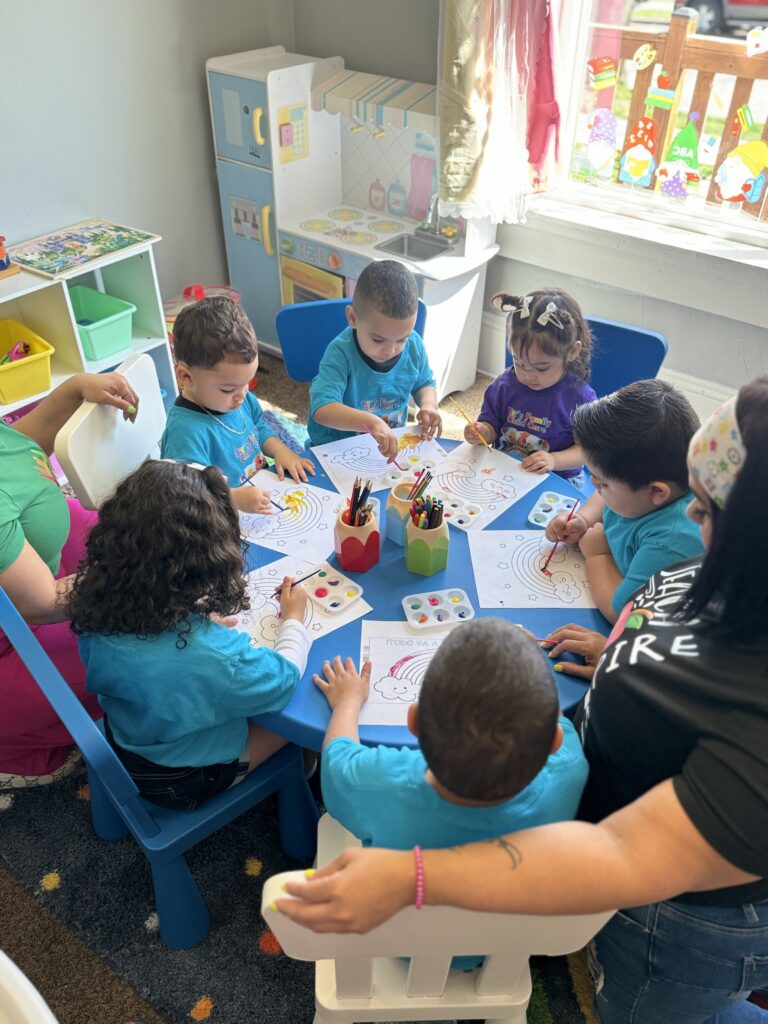
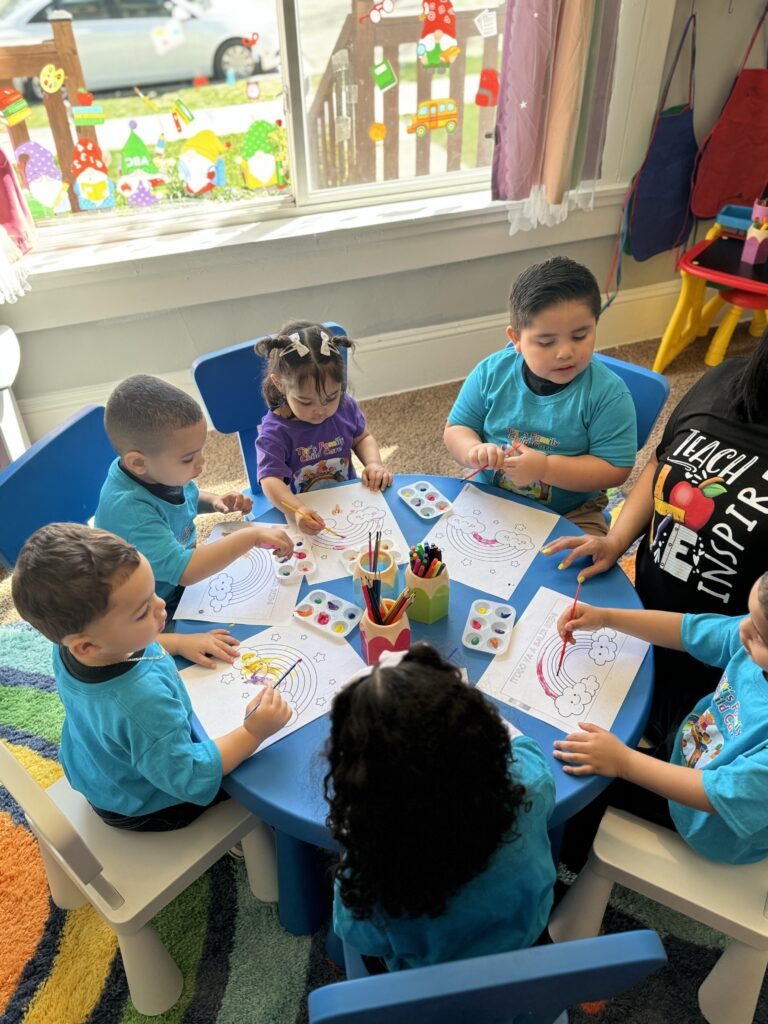
Art is important in children’s education because it helps develop their creativity and ability to express themselves, it also helps them better understand the world around them and develop skills.
Skills that are strengthened:
✔️Development of fine motor skills
✔️Stimulates the motor coordination
✔️Develops tactile sensitivity
✔️Improves the expression of feelings and communication
Creating a child’s portfolio is important: there are different ways to create a child’s portfolio, it can be created physically and it can also be done electronically.
The portfolio is a method of teaching, learning and evaluation that consists of the compilation and publication of various evidence of activities throughout the child’s development through which it can be evaluated by the teacher. This evidence informs the learning process that the child follows, allowing the child and the teacher to see their efforts and achievements, in relation to the learning objectives and previously established evaluation criteria.
The easiest way to start creating a student portfolio is by using a student portfolio template, but you can also create your portfolio from scratch in the creation software of your choice. What matters is not the amount of documentation you compile for each portfolio, is the quality of the information it collects. Portfolios tell a story about the whole child. There must be a beginning, a middle that would be learning and progress and an end that would have the achievements and goals achieved.
How to Organize a Child’s Portfolio
Each child should have their own portfolio. A well-organized portfolio will contain observations and artifacts of children’s work that are collected at different time periods throughout the school year or in a daycare setting. It’s recommended that it includes some type of documentation that highlights each development domain.
To collect and record data, you can use the following methods:
✔️ Continuous registrations
✔️ Anecdotal notes
✔️ Checklists
✔️ Frequency counts
✔️ Learning stories
✔️ Time or event samples
✔️ Work samples
✔️ Take photos, record videos or audio recordings
To Store your DAocumentation
You can use a folder or notebook, a file or accordion-style folder, or a cardboard box. As observational evidence is collected for each child, it is vital that you come up with everything so you can organize it chronologically. This will help you track each child’s progress throughout the school year more efficiently. Portfolios help you build a complete, authentic picture of each child in your class. By knowing the “whole child”, you are better equipped to develop each child’s individual interests, and better able to plan appropriate activities for them.
It is recommended that you include some type of documentation that highlights each domain of development. For example:
Gross motor: take photos of your child while he or she engages in outside activities such as running, jumping, climbing, riding a bike, or playing in the sandbox.
Fine motor: keep a checklist of when your child learns to button and tie their shoes. Include samples of cutting work, coloring, painting, and emergent writing samples.
Social-emotional: write anecdotal notes when your child participates in open-ended, child-directed play. Take note of how they share and cooperate with others. Do a frequency count to see which centers the child chooses to spend time with and gauge their play patterns to see if they prefer to play alone or with others.
Cognitive: trace a science experiment and take photos.
Photograph a completed puzzle. Use a video camera to record a girl building a block bridge. As the girl explains her process and has to figure out all the steps to take to keep the bridge from falling over, be sure to record that too.
Literacy and oral language: save writing examples to follow how the girl writes her name. Include illustrations of stories they like and stories they write themselves. Write quotes in your running log or make audiotapes of conversations during the circle time activities.
Creative expression: record the child playing in the role-play area or performing a dance during music and movement. Photograph a clay, paint, or block tower creation.
To be clear, what matters is not the amount of documentation you collect for each portfolio, it is the quality of the information it collects. Portfolios tell a story about the child. There must be a beginning, a middle and an end. Each work sample, anecdotal note, checklist, frequency count, and learning story should be used to show how a child processes information, develops relationships, and learns while playing.
Document Children’s Learning
Whether you collect evidence through spontaneous or planned observations, you will use your documentation to ultimately evaluate a child’s learning, growth, and development.
With well-organized documentation, intentional teachers can communicate effectively with a child’s family, using the evidence and artifacts they have collected over time. Families appreciate being able to see their children’s progress and how they interact with others.
Families also enjoy seeing the types of activities that their child participates in during a typical day at school. Here are some ways of documentation that can be used to show a child’s learning, growth, and development:
Rating scales and formal developmental assessments.
Daily progress reports and documentation dashboards.
Tips for Teachers when Collecting their Documentation
You can use a folder or notebook, a file or accordion-style folder, or a cardboard box. As observational evidence is collected for each child, it is vital that you come up with everything so you can organize it chronologically.
This will help you track each child’s progress throughout the school year more efficiently. Portfolios help you build a complete, authentic picture of each child in your class.
By knowing the “whole child”, you are better equipped to develop each child’s individual interests, and better able to plan appropriate activities for them.
Date: this is the key to tracking development over time
Time: start time and end time
Environment: consider location (indoor or outdoor; center or play area)
Purpose: what is the intended goal
Consider the child (or children) participating in the activity
Record only the facts: write down exactly what you see and hear
Be as specific (to the point) as you can
Record the events in the order in which they occur
Be descriptive and provide vivid details- create a visual image so others can “see” what is happening
Be specific and avoid vague or general terms- this is helpful when you revise your data.
Some resources you can use: The Redleaf home Child Care Program, Second Education, offers the same easy-to-use format of the original with new activities and ideas to create hundreds of creative and inclusive learning experiences.
Activities are organized according to age groups and domains development- physical and motor, cognitive, communication and language, social and emotional, and preparation for learning.
The material is organized to be used as a reference and to allow you to choose what you are looking for to meet the particular needs of the children in your care.
The book contains a complete curriculum for developing a successful home child care program that promotes the healthy development of infants, toddlers, and preschoolers in a loving, nurturing environment.
Ages and stages Questionnaire (ASQ)
Provides reliable social-emotional and developmental assessments and accurate for children between birth and 6 years.
Drawing on parents’ expert knowledge, ASQ has been specifically designed to identify developmental progress and detect delays in young children- setting the stage for meaningful next steps in learning, intervention or monitoring.
Courtesy of Precious Moment Child Care
Veracity • Innovation • Commitment • Positivism
Make ourselves known as a magazine for educators and share stories and reinforce our main teachings. Publicize small education businesses in the Milwaukee community Coming directly to homes and digital.